
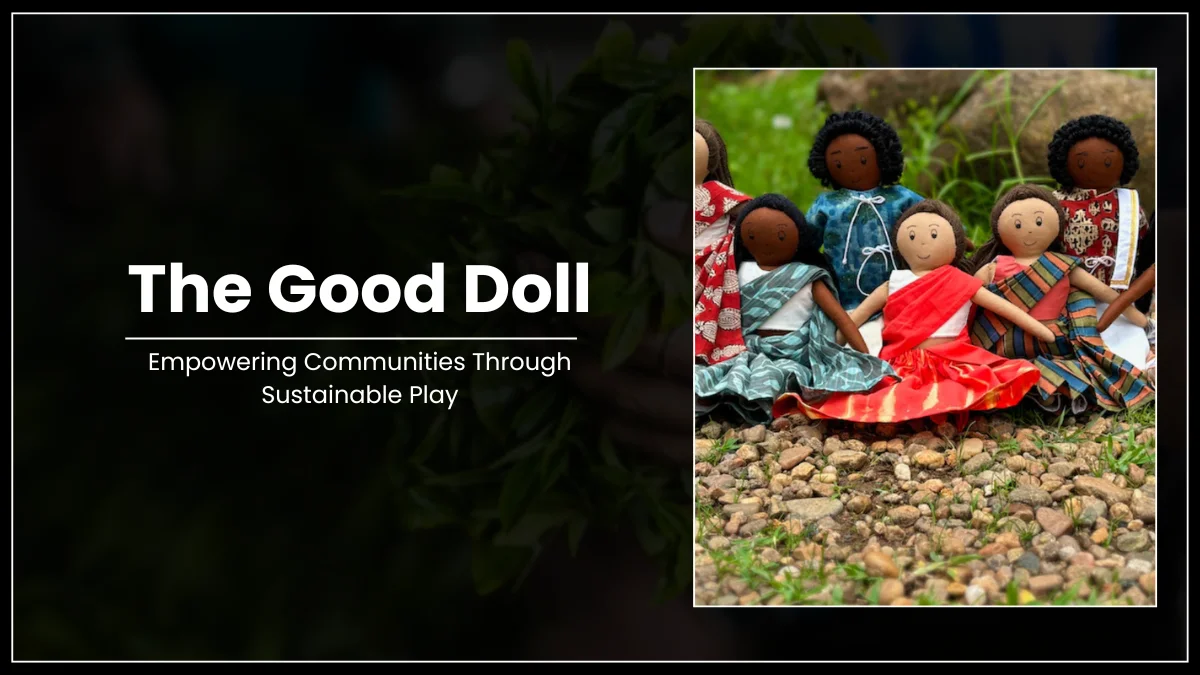
In the serene Nilgiri hills of Tamil Nadu, a unique initiative is weaving together sustainability, empowerment, and play. The Good Doll, co-founded by Sunita and Suhas Ramegowda in 2021, is reimagining the classic rag doll for today’s conscious consumers. By transforming textile waste into handcrafted dolls, the venture not only reduces environmental impact but also uplifts rural and indigenous women artisans.
About the Founders
Drawing inspiration from childhood memories of handmade dolls crafted by grandmothers, Sunita and Suhas envisioned a venture that marries tradition with modern sustainability. Their commitment to social impact led to the creation of The Good Doll, aiming to provide meaningful employment to women in the Nilgiris while promoting eco-friendly toys.
Identifying the Problem
The global toy industry is dominated by plastic products, often lacking cultural relevance and contributing to environmental degradation. Recognizing this gap, The Good Doll seeks to offer an alternative that is both sustainable and culturally resonant, fostering a deeper connection between children and their heritage.
The Solution
The Good Doll’s approach encompasses:
- Sustainable Materials: Utilizing upcycled pre-consumer textile waste, the dolls are eco-friendly and reduce landfill contributions.
- Artisan Empowerment: Women from rural and tribal communities in the Nilgiris are trained and employed, promoting economic independence and preserving traditional crafts.
- Cultural Representation: Dolls like “Nilah” embody diverse Indian identities, offering children toys that reflect their own cultures and stories.
- Educational Storytelling: Through narratives like “Nilah’s Adventures,” the dolls serve as tools for storytelling, teaching values and traditions.
About the Startup
Since its inception, The Good Doll has achieved significant milestones:

- Environmental Impact: Repurposed over 8,000 kg of textile waste into handcrafted dolls.
- Community Empowerment: Provided employment opportunities to over 200 women artisans in the Nilgiris.
- Market Presence: Collaborated with brands like Freedom Tree and Yellow Dwelling, and featured in platforms such as Shark Tank India Season 4.
- Retail Expansion: Products available in stores like The Bombay Store, Okhai, and online marketplaces including Amala Earth and iTokri.
Final Thoughts
The Good Doll exemplifies how traditional crafts can be revitalized to address contemporary challenges. By intertwining sustainability, cultural representation, and social empowerment, the venture offers more than just toys-it provides stories, values, and a vision for a more inclusive and environmentally conscious world.


